

.jpg)
All Indications Different Options
in One System
Medacta has expanded its posterior cage portfolio for the treatment of degenerative disc disease with the addition of 3D-metal interbody fusion devices, specifically designed to provide strong primary stability and long-term spinal stabilization.
Made of 3D-printed Titanium, the MectaLIF 3DM System cages feature a gyroid lattice structure engineered to resemble trabecular bone [1,2], and an anatomical design to address the surgical needs of your patients.




All MectaLIF 3DM cages incorporate a gyroid lattice structure, a triply periodic minimal surface (TPMS) characterized by the absence of self-intersections and sharp edges, specifically designed to mimic the architecture of trabecular bone providing a highly interconnected porous network [1,2,3]
The MectaLIF 3DM Posterior & Oblique cages are versatile interbody fusion devices suitable for multiple surgical approaches and designed to support:
Traditional Bilateral Posterior Approach
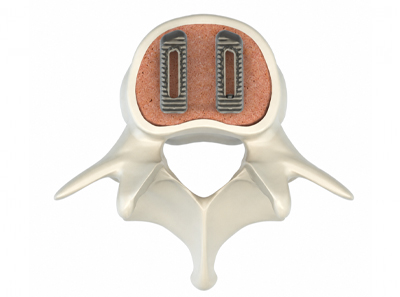
MectaLIF 3DM Posterior cages provide stable support through a large area of intervertebral contact
Transforaminal Unilateral Approach
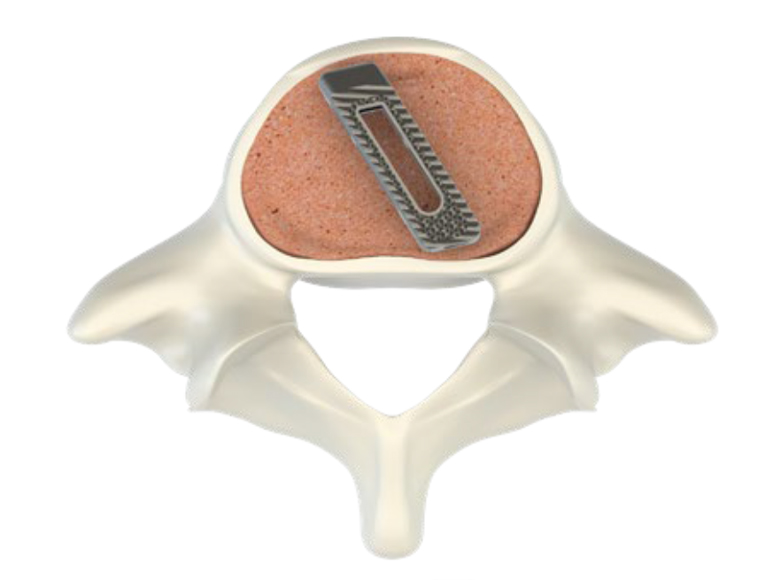
MectaLIF Oblique cages with 3D lordosis offer stable vertebral support via a smaller incision and reduce the risk of subsidence
Thanks to their anatomical design, the MectaLIF 3DM cages provide full anteroposterior support on both flat and irregular concave endplates.
Engagement of the cortical apophyseal ring, both anteriorly and posteriorly, is considered essential to promote physiological load transfer and help minimize the risk of implant subsidence [5].
Based on this principle, the MectaLIF 3DM Oblique and Posterior cages are shaped to support direct contact with the peripheral cortical regions, aiming to facilitate bicortical bridging and physiological stress distribution.
MectaLIF 3DM cages integrate with the MUST MIS Platform, a system designed to facilitate implant insertion through a minimally invasive spine approach using dedicated instrumentation.

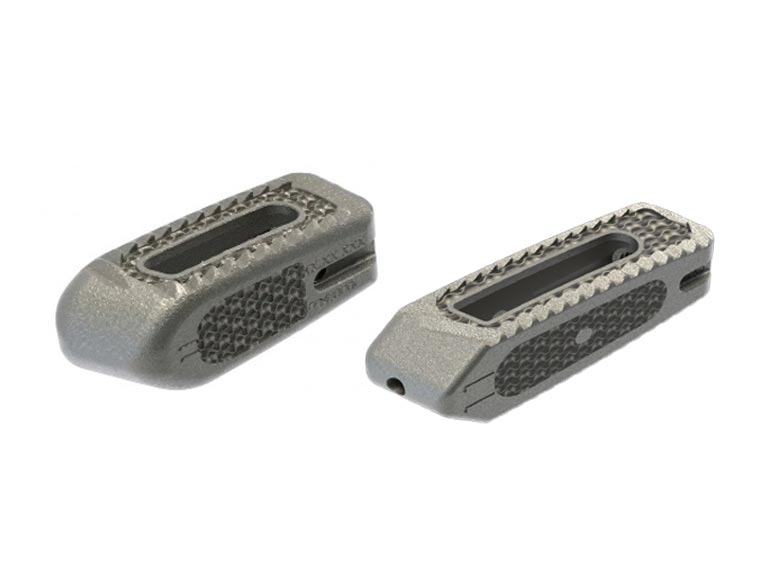
Designed to facilitate posterior insertion.
Minor posterior endplate preparation required.
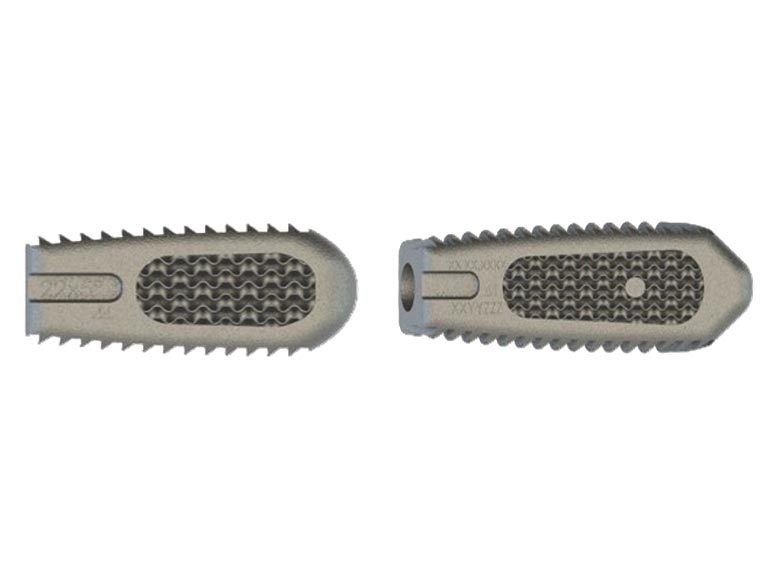
Biconvex anatomical shape is designed to match the native endplate profile, even in cases of convex or irregular surface.
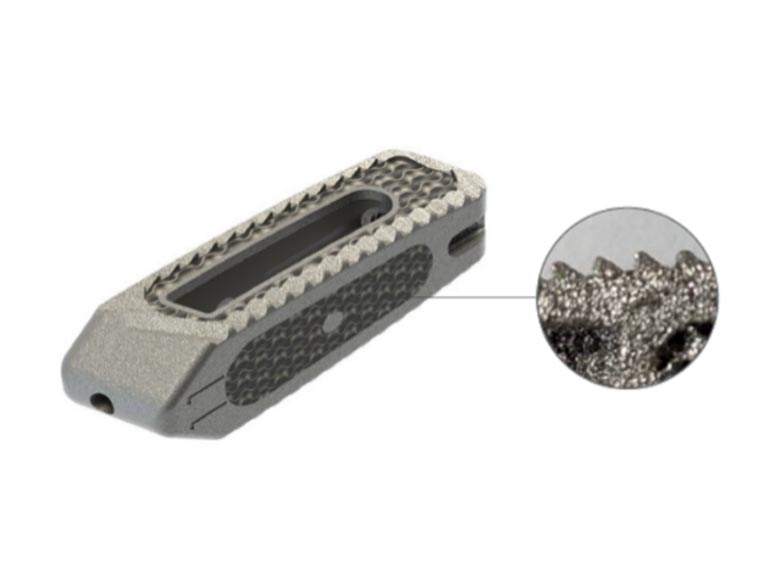
The sawblade teeth on the implant surface improve grip on the vertebral endplates.
Their preferential direction eases insertion and prevents migration, leading to a lower risk of implant mobilization.
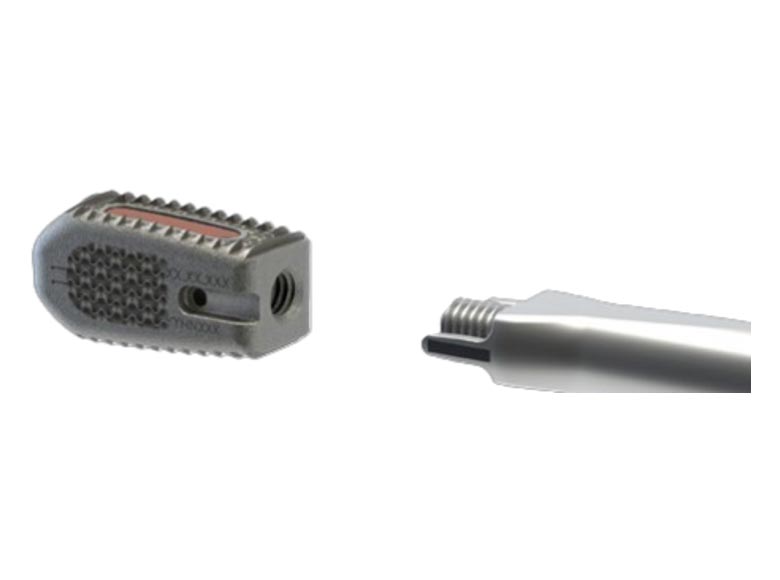
A quick and secure connection to the inserter enables controlled and reliable implantation.
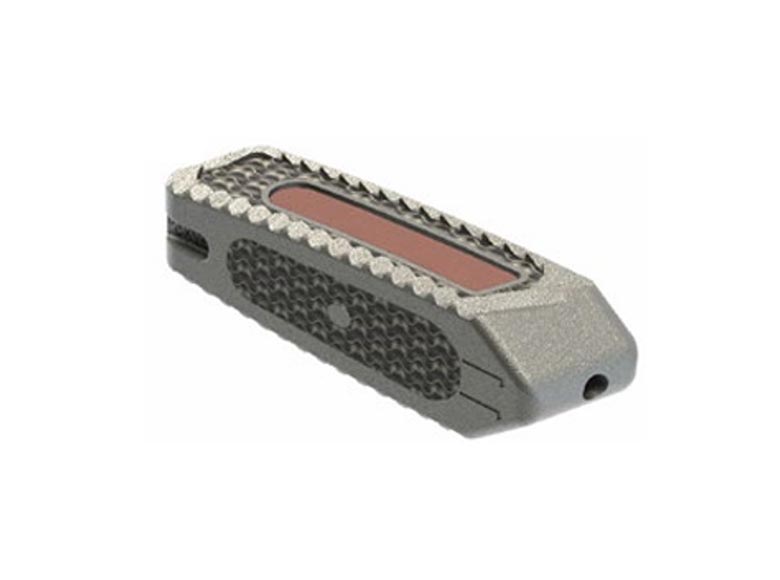
A large central window allows placement of significant amount of bone graft to promote fusion within the cage lumen.
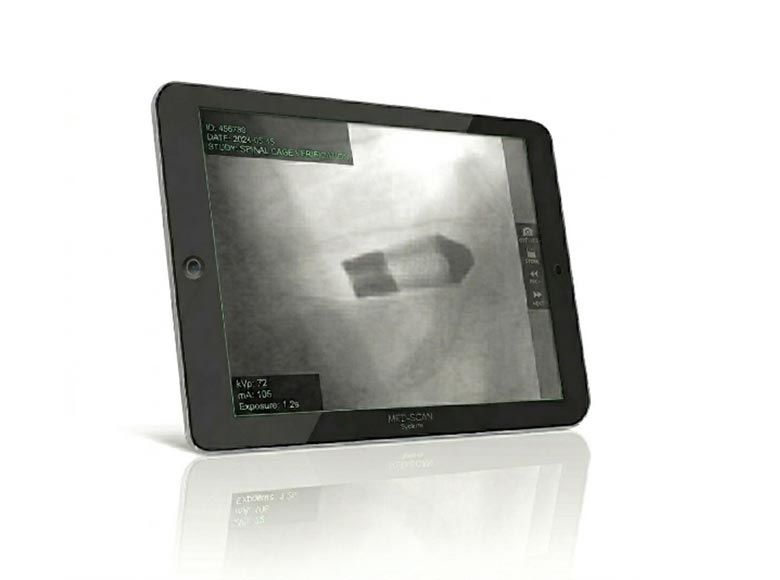
MectaLIF 3DM cages provide clear and reliable visualization under fluoroscopy:
Supporting Literature
[1] Kovács, Ágnes Éva, et al. "Comparative analysis of bone ingrowth in 3D-printed titanium lattice structures with different patterns." Materials16.10 (2023): 3861. 2021 Jan.
[2] Van Hede, Dorien, et al. "3D‐printed synthetic hydroxyapatite scaffold with in silico optimized macrostructure enhances bone formation in vivo." Advanced Functional Materials 32.6 (2022): 2105002.
[3] Barba, D., E. Alabort, and R. C. Reed. "Synthetic bone: Design by additive manufacturing." Acta biomaterialia97 (2019): 637-656.
[4] Timercan, Anatolie et al. “Mechanical properties and fluid permeability of gyroid and diamond lattice structures for intervertebral devices: functional requirements and comparative analysis.” Science and technology of advanced materials 22.1 (2021): 285–300.
[5] Hou, Yang et al. “Influences of disc degeneration and bone mineral density on the structural properties of lumbar end plates”. The Spine Journal, 12 (2012), 249-256.

The M.U.S.T. Pedicle Screw System is an unconstrained polyaxial screw, rod and connector design applicable to degenerative, deformity and trauma indications using traditional open or MIS surgical approaches.

The MUST MIS Platform represents an effective and integrated concept for minimally invasive spine surgery. The Mini Open retractor, together with the MUST Percutaneous system, supports surgeons in achieving efficient surgical outcomes.
Peyman Pakzaban, MD
PLIF Case 4
Peyman Pakzaban, MD
PLIF Case 5
Peyman Pakzaban, MD
PLIF Case 6
 Leaflet